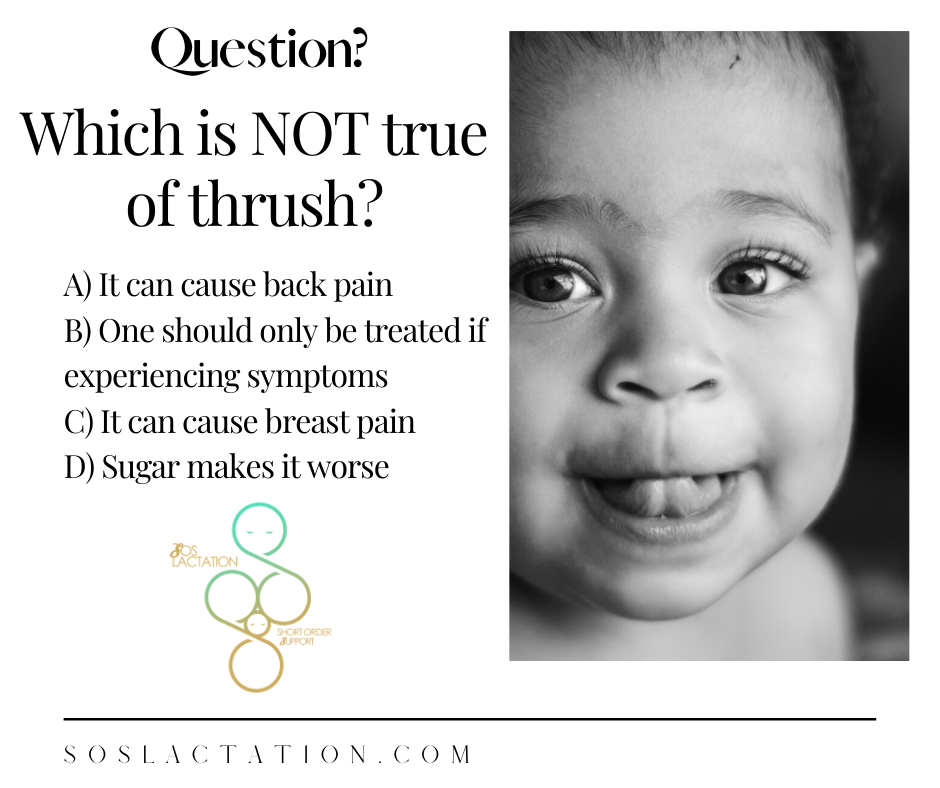
The short answer is that thrush breastfeeding symptoms are not always the only explanation.
A sore nipple, breast pain, or a white tongue baby can be part of thrush, but they can also overlap with other feeding issues. That is why a white tongue or a painful latch does not automatically mean thrush.
What is commonly misunderstood
Thrush can be part of the picture, but it is not the only thing that can explain breastfeeding pain.
Breast thrush symptoms may include nipple pain that does not feel typical, sharp or shooting breast pain, or white patches in a baby’s mouth that do not wipe away easily. Those signs can happen with thrush, but they can also happen with latch problems or other feeding issues.
Why symptoms can overlap
Symptoms can overlap because a shallow latch, nipple damage, or tongue movement issues may look a lot like thrush at first.
A white tongue baby may simply have milk residue. Breastfeeding pain may come from latch compression or nipple irritation. Sometimes more than one issue is happening at the same time.
When to get help
It is a good time to get help if feeding is painful, symptoms are not improving, or you are unsure whether what you are seeing is thrush or something else.
A qualified provider can help you look at the full feeding picture and decide what kind of support makes sense next.
What support can look like
Support may include a feeding-focused conversation, a look at latch and positioning, and a discussion of whether the symptoms fit thrush or another issue more closely.
If pain is part of the picture, see Painful Breastfeeding Help in Houston. If you want to understand the process first, visit What to Expect. If you need broader support, see Lactation Help Houston. You can also review services or book a consultation.
This page is meant to help you think clearly about the possibilities, not to diagnose thrush at home.
Next steps
If your feeding situation feels confusing, start with the simplest question: does the pattern look like a latch problem, possible thrush, or something else that needs a closer look?
You do not need to figure that out alone. A calm, feeding-focused assessment can help you get oriented and decide what comes next.